
Finding Madison County Residents
A useful Madison County residents directory begins with the fact already known. An address belongs first in the county parcel search. An owner name can move from that parcel to a recorded deed. A person from an earlier decade belongs in a printed directory, census schedule, newspaper index, or archive catalog. These sources serve different roles. The assessor identifies a taxpayer and parcel, not every person at the address. The Recorder proves that an instrument was recorded, while the Circuit Clerk indexes court matters. No single official list names every current household member.
Use two independent points before deciding that records concern the same person. A middle initial, parcel identification number, spouse or parent name, date, township, and document number can separate people who share a name. Madison County also spans many cities, villages, and townships. Municipal limits decide whether a city clerk or county office holds a permit or local record. The postal place alone may not settle that question.
- Enter the name or site address in DEVNET and save the parcel number, owner, and mailing address.
- Check the GIS viewer to place the parcel among nearby lots, roads, and municipal lines.
- Use Tapestry or the Recorder's vault to confirm the deed and follow prior parties.
- For an older household, search Hayner, IRAD, and local digital collections by name and year.
- Ask the correct custodian for a record that is not published online.
This starter path suits family history, estate research, civic review, and checking a seller's claim. Official indexes are leads, not a license to intrude. Search results must be used for a lawful purpose and never to stalk, harass, or harm anyone.
Madison County Directory Offices
Edwardsville is the hub for the county record trail. The Recorder, County Clerk, Chief County Assessment Office, and Circuit Clerk work from offices on or near North Main Street. Each keeps a separate index. The Recorder holds deeds and other instruments. The assessment office maintains parcel and valuation data. The County Clerk handles local vital records and elections, while the Circuit Clerk keeps Third Judicial Circuit case files. Address work beyond this overview continues in the Madison County street directory.
Madison County Recorder
157 North Main Street, Suite 211
Edwardsville, IL 62025
618-692-7040
Chief County Assessment Office
157 North Main Street, Suite 229
Edwardsville, IL 62025
618-692-6270
Madison County Clerk
157 North Main Street, Suite 109
Edwardsville, IL 62025
618-692-6290
Counter access still matters. The Circuit Clerk provides public terminals, and the Recorder's older books and vault bridge gaps before online coverage. For a county administrative file, send a focused written request to the department that created it. Illinois FOIA does not require a standard form or a reason for an ordinary request.
Start With Madison County Parcels
When the search begins with an address, the DEVNET wEdge property search is the most direct current index. Its basic and advanced controls accept a parcel number, owner, site address, mailing address, sale details, tax year, property class, tax district, and ZIP-related fields. The site address, also called the situs address, locates the parcel. The mailing address is where the tax bill goes. Those two addresses can differ, and neither proves who sleeps in the building.
| Search field | Best use | Limit |
|---|---|---|
| Owner name | Find parcels tied to a named taxpayer | Common names need another match |
| Site address | Identify the physical parcel | Old numbering may not match |
| Mailing address | Find a contact or deed-search clue | Not proof of occupancy |
| Parcel number | Connect tax, map, and deed records | Not a street address |
| Sale and ZIP filters | Narrow a large result set | ZIP does not equal a city line |
The parcel card may show owner, mailing and situs addresses, class, legal description, assessments, taxes, sales, buildings, and linked documents. Save the parcel number before moving to the Recorder. It is the strongest bridge when spelling, street form, or a postal label changes.
Confirm Madison County Ownership
A parcel result is an assessment record. Recorded ownership should be checked in the Recorder's index. Madison County land books begin in 1812, but the county's web guidance describes online land-record searching after 1984. Tapestry can search party names, document type and number, date, consideration, subdivision, parcel, and metes-and-bounds text. A grantor gives an interest; a grantee receives it. Search both roles when following a chain.
The Tapestry deed interface shows the online route used by the Recorder.
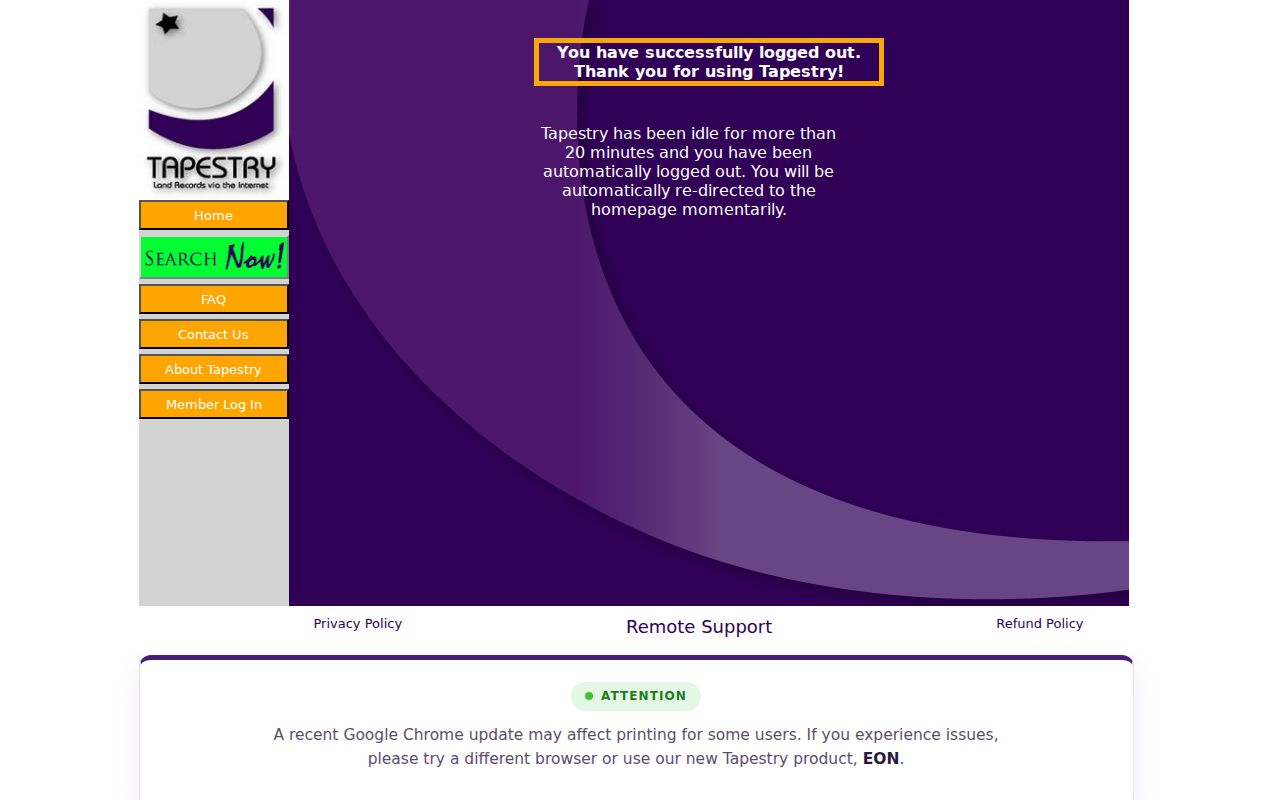
The screen is a starting index, not a legal opinion on title. Image access or printing may require an account or payment. Older instruments may require the Recorder's vault, books, rollfilm, an email or mail copy request, or IRAD. That split is why an empty web result does not settle an old ownership question.
Insider tip. Carry the parcel number and legal description from DEVNET into the deed search when a name produces too many matches.
Madison County Voter Boundaries
The county publishes a Voter Search, downloadable Voter Lists, and an Election History database. These are election tools, not a complete roll of residents. Illinois Election Code rules restrict disclosed fields and their use. Street number, phone, Social Security number, date of birth, and email portions can be redacted or withheld, and computerized voter data is limited to bona fide political purposes. Do not use a voter result as proof that everyone at an address is listed.
The official Madison County Voter Search presents the county lookup and its use notice.
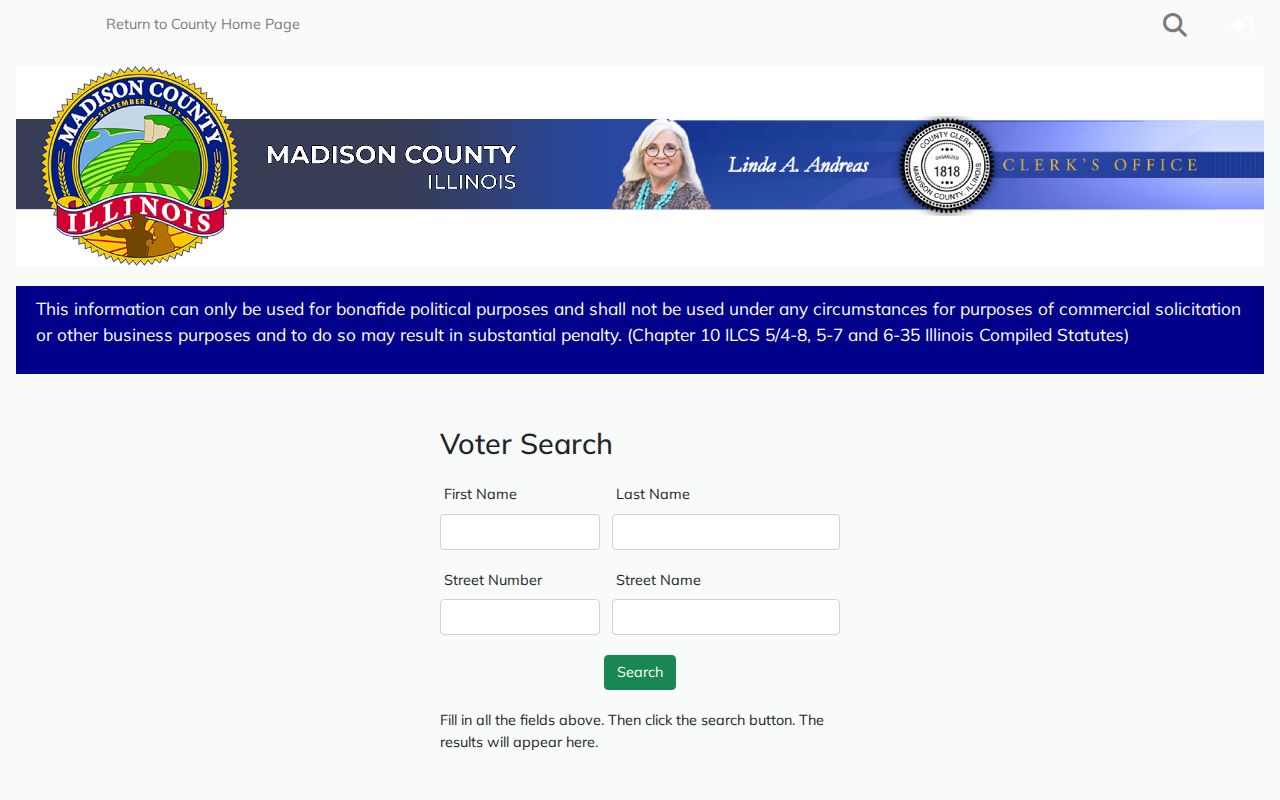
For civic research, the separate lists export can be narrowed by district, township, and precinct. Historical election totals belong in Election History. A current registration question can also go to the County Clerk or the Illinois statewide registration lookup.
Check Madison County Court Names
A court index can supply a case number, filing date, party role, or disposition that distinguishes two people with the same name. The Third Judicial Circuit route begins at the Circuit Clerk and links to Clericus Magnus for a participant or case-number search. Public terminals are available at the clerk's office. Sealed, expunged, juvenile, and other protected material will not appear like an ordinary public case.
The county's Circuit Clerk search page explains the entry point.
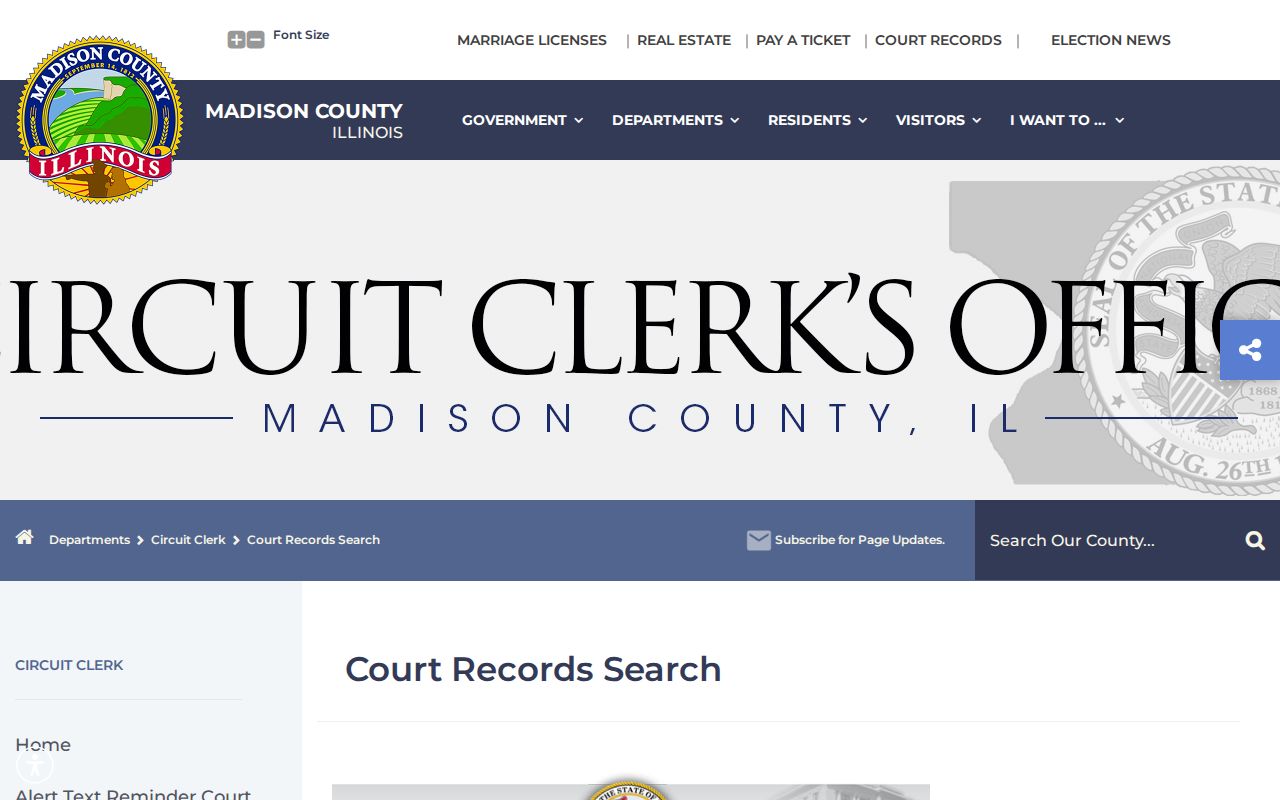
An index entry is not the full file. Ask the clerk for the docket or copy procedure, and use the case number in later contact. Federal matters in Madison County use the Southern District of Illinois and PACER, which requires an account and can charge for pages.
Current Madison County Directory Sources
Current directory evidence is scattered by record type. Property, recorded instruments, voter registration, court cases, and licenses each cover a defined group. None is a countywide household roster. Begin with the source whose reason for collecting the name matches the question, then confirm the result elsewhere. This keeps an owner from being mistaken for an occupant and a business mailing address from being treated as a home.
| Source | Who It Lists | Keeper | Access |
|---|---|---|---|
| DEVNET property roll | Named parcel owners | Assessment office | Free portal |
| County voter tools | Eligible registered voters | County Clerk | Restricted by Illinois law |
| Tapestry deed index | Parties to recorded instruments | Recorder | Online after 1984; images may cost |
| Circuit case index | Public case participants | Circuit Clerk | Portal and public terminals |
| DFPR eLicense | State-regulated professionals | Illinois DFPR | Free name and license search |
A focused search for one name can add the Illinois Secretary of State business index, DFPR license lookup, I-CASH unclaimed property search, and official custody locators when relevant. The Madison County resident lookup explains how to cross-check these one-person results without treating a shared name as identity proof.
Madison County Vital Record Split
Birth, death, marriage, and civil-union records require a request, not a broad public name search. The Madison County Clerk supplies local certified copies subject to identity and eligibility rules. County genealogy access uses age thresholds of more than 75 years for birth, more than 50 years for marriage, and more than 20 years for death. Illinois Department of Public Health is the state route for birth and death records and for marriage or dissolution verifications. A certified dissolution file comes from the Circuit Clerk.
The county birth-record page shows the local request requirements.
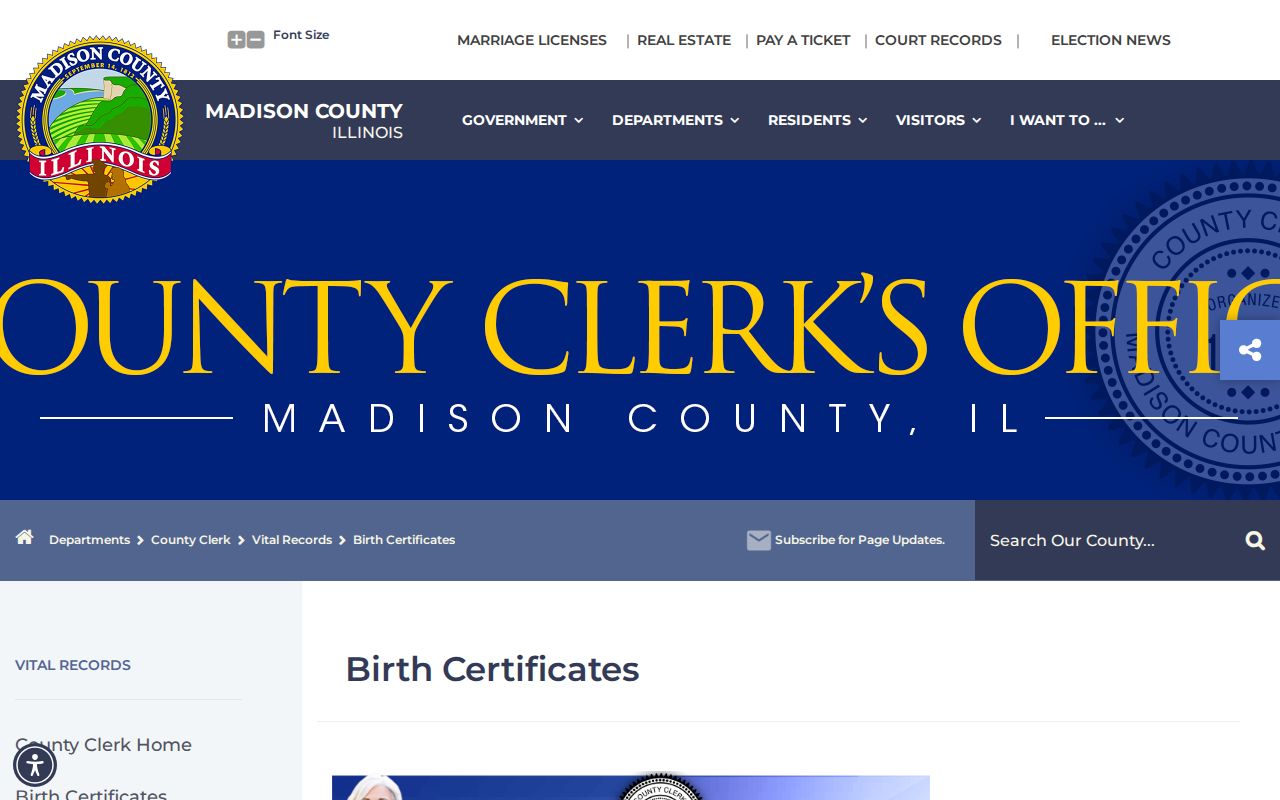
The image reinforces that a vital record is an eligibility-based copy process. Alton also keeps specified local events: births for Alton and Godfrey and deaths for Alton, Godfrey, Moro, and Fosterburg. Mail, counter, and authorized online options differ by custodian.
Check Madison County Postal Geography
A ZIP can narrow a residents directory search, but it cannot prove a municipal boundary. The 2020 Census relationship file has 36 ZCTAs intersecting Madison County, while an Illinois service list uses 24 ZIP codes for its own program. Those are different measures. Edwardsville appears with 62025 and 62026, and PO-box-style entries must not be treated as physical neighborhoods. Save the exact postal form and the parcel's situs address separately.
The USPS ZIP Code Lookup accepts an address, city and state, or a ZIP.
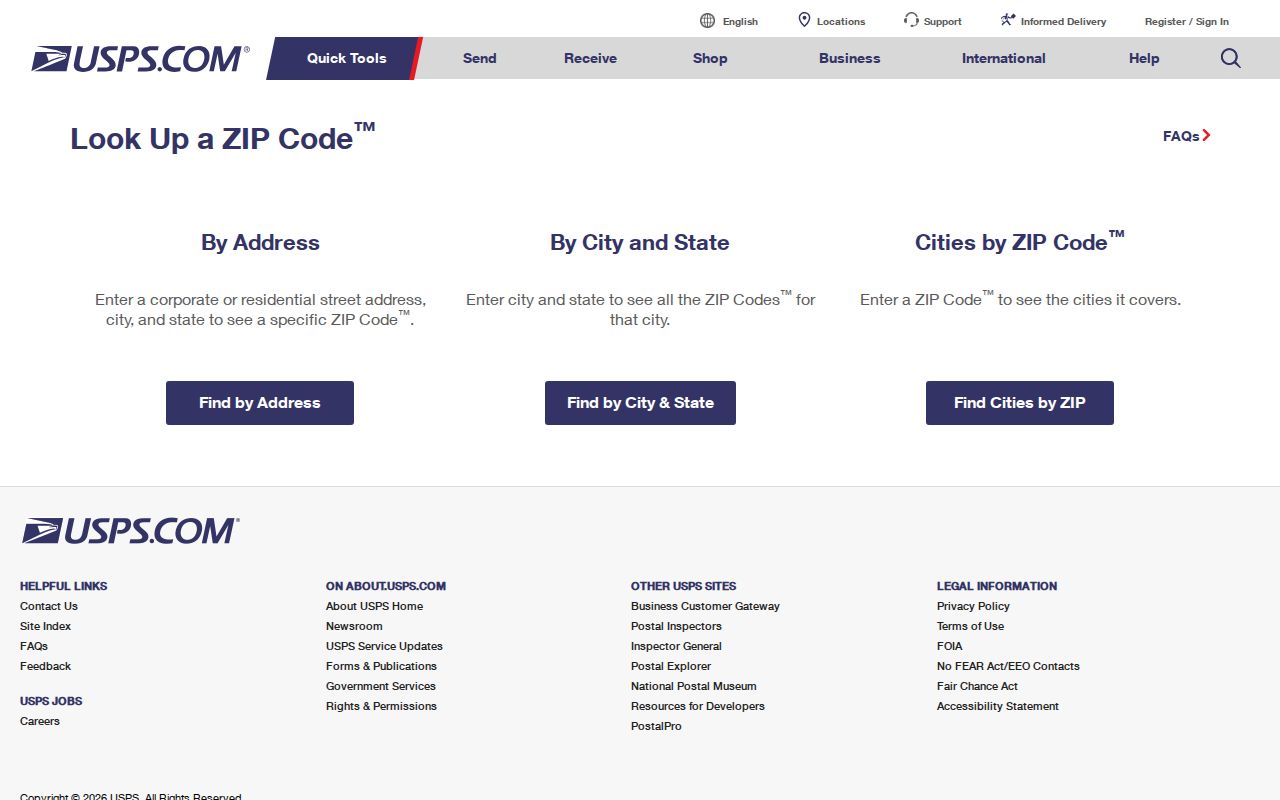
Use USPS for the mailing code, DEVNET for parcel geography, and the relevant municipality for city-limit custody. Historical entries may use Upper Alton, North Alton, Leclaire, Fosterburg, or an old township label instead of today's postal wording.
Request Missing Madison County Records
Online coverage is uneven. Illinois Freedom of Information Act, 5 ILCS 140, provides the general fallback for an existing nonexempt record held by a public body. A written request needs no standard form and no reason. An ordinary request is generally due a response within five business days, subject to a written extension allowed by the law. Ask for a specific department, record type, address or parcel, date range, and electronic format.
The county offers an online FOIA request portal for routing a request.
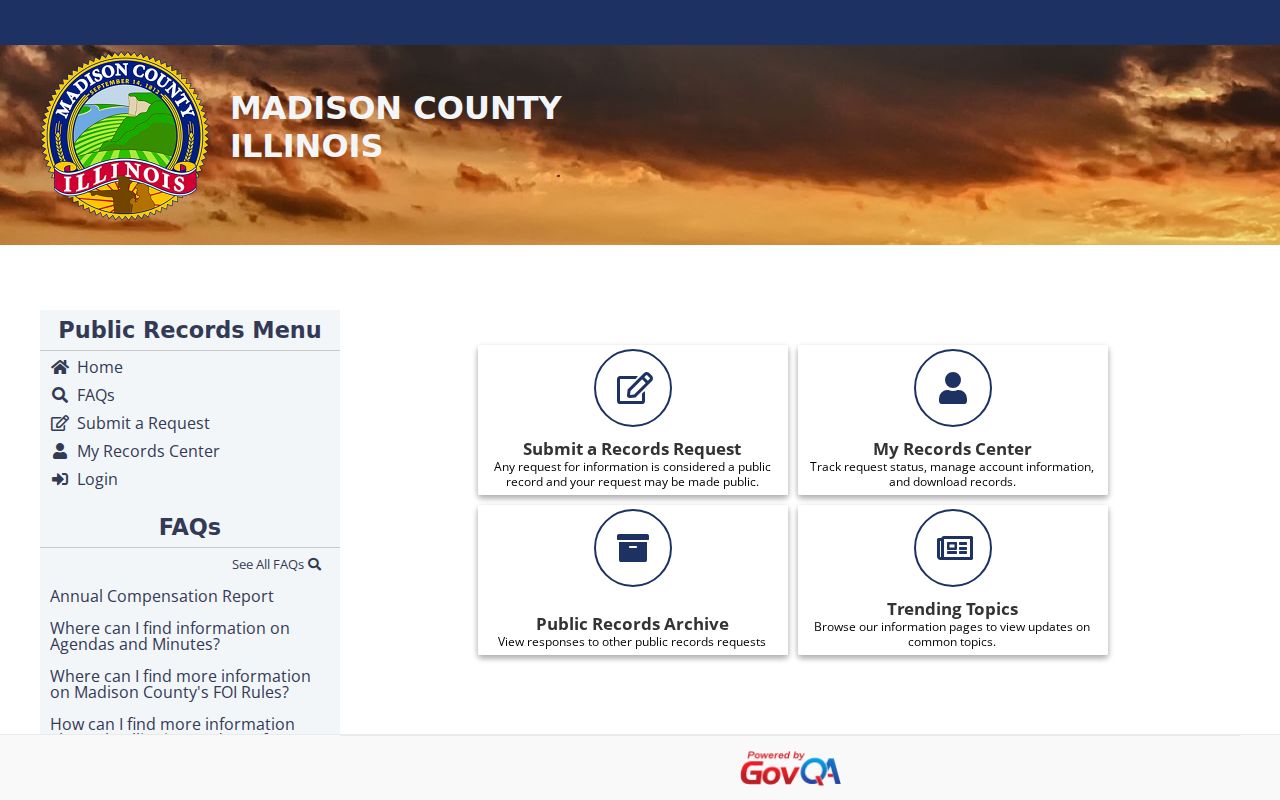
FOIA does not force an office to create a new resident list, answer research questions, or release protected data. Older deeds may be easier through the Recorder's vault, while historical court and local-government series may be found through IRAD. A library appointment can be faster for directories, newspapers, maps, and obituaries.
Madison County Privacy Safeguards
Some residents have lawful reasons to keep an address out of ordinary view. Illinois Safe at Home provides eligible survivors with a substitute address and a four-year certification through the Attorney General. It does not erase old public records or guarantee that every property record is hidden. Voter, vital, adoption, juvenile, sealed, and expunged records have separate limits. Direct a correction or protection request to the custodian responsible for that record.
Property owners can also use the Recorder's free Property Fraud Alert for notice when a document is recorded under a registered name. The county said the program began in 2022. It is an alert, not a title search. It can help an owner spot questionable activity without buying an unsolicited deed copy.
Lawful use. Public access supports personal research and civic transparency, but it never permits stalking, harassment, intimidation, or harm.
Madison County Records Still Move
Not everything is online, and the available set is changing. Madison County's 2025 Recovery Plan lists digitization projects for County Clerk, Circuit Clerk, and County Board records, each with an expected fourth-quarter 2026 finish. The listed allocations are $500,000, $900,000, and $298,233. Those projects explain why a current portal gap should be checked again later rather than treated as a permanent loss.
The older trail is already deep. Madison Circuit Clerk's digital collection describes 122 immigration and naturalization volumes, three slave-emancipation-register volumes, and 458 probate books. IRAD adds early deed, marriage, probate, court, coroner, and local-government series. Madison County was formed in 1812, and its land records begin that year. The online deed cutoff after 1984 is therefore only one slice of the full record span.
Custody names also changed over time. IRAD traces the county's governing record series through the Court of Common Pleas, County Court, Justices' Court, Commissioners' Court, and later county boards. Township government began in 1875, and old indexes may use a township name that differs from the modern postal place. Gillham became Chouteau in 1876, while Fosterburg later became Foster. Search both forms when a family disappears between two years. These details can turn a failed keyword query into the correct archive series.
Note: A blank web search may mean the record is at a counter, in a vault book, on microfilm, or in an archive catalog.
Historical Madison County Directories
Printed directories put names, occupations, spouses, businesses, and street addresses into a particular year. Alton coverage begins at least in 1858, followed by an 1866 Madison County directory and runs associated with W.B. Harris, W.H. McCoy, Huber, and later publishers. A criss-cross directory reverses the usual order by arranging entries around an address or phone number. It is especially useful when the street is known but the household name is not.
The Hayner Genealogy and Local History Library is the central Alton-area research room.
Hayner adds newspapers, obituary indexes, cemetery files, census material, maps, photos, yearbooks, naturalizations, and an Alton Property Research File. The full shelf, publication years, and entry-reading method belong to the Madison County city directory collections page.
The Madison County Historical Society catalog offers another name, map, image, and publication route.
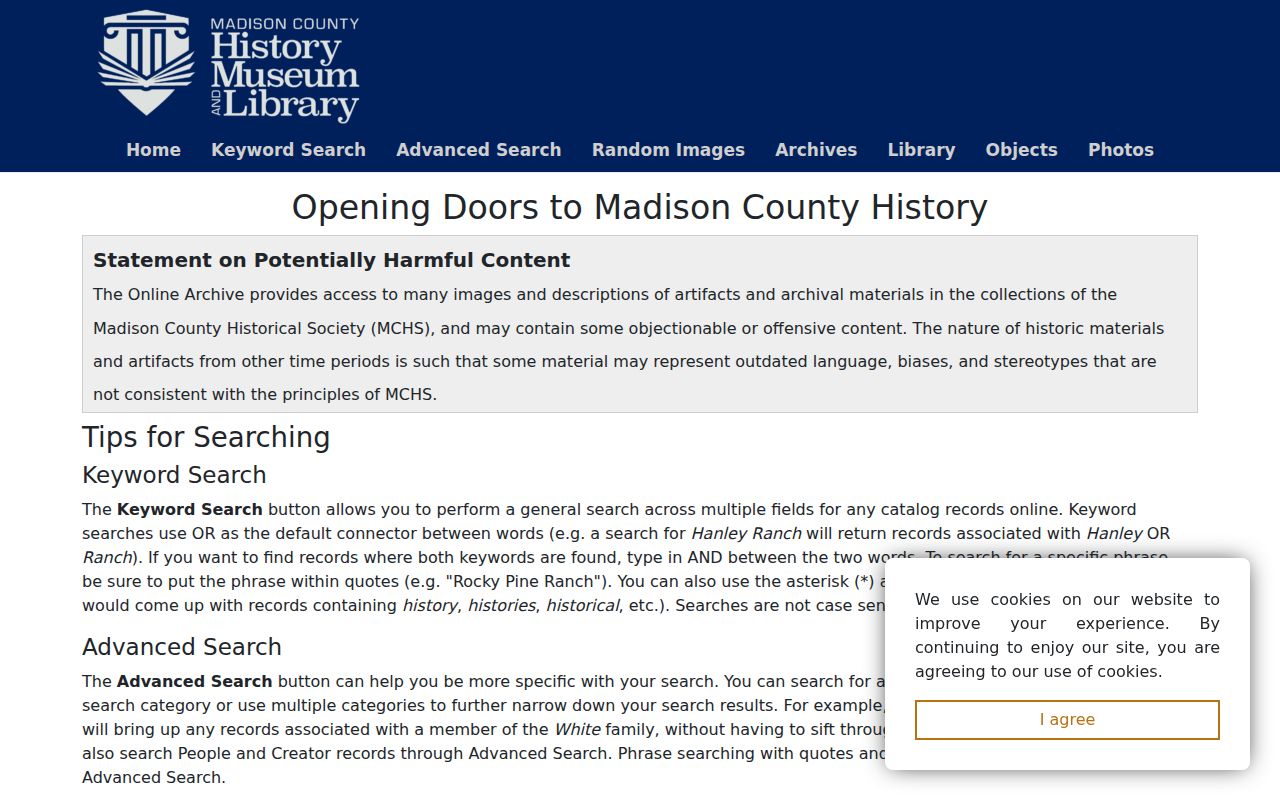
This catalog reaches local material that a tax or court portal cannot show. Pair its metadata with the original book, image, or government record before drawing a firm conclusion.