
Madison County Address History Sources
Previous residents appear in records made for different reasons. The current assessment roll names the party tied to a parcel, while a recorded deed documents a transfer. Printed directories can place a listed person at an address in one publication year. Census schedules add household detail for years open under the federal 72-year rule. No source covers every era or every occupant.
The strongest starting point depends on the date. Recent work begins with the parcel number, or PIN, and today’s owner. A nineteenth-century Alton search may begin with a city directory, deed book, census index, or Sanborn map. Madison County’s record trail reaches much farther back than its web search.
| Source | Years it covers | Where held | What it shows |
|---|---|---|---|
| Land records | 1812 forward; web search after 1984 | Recorder, Tapestry, vault, deed books | Owners, transfers, instruments, legal descriptions |
| Alton directories | Listed from 1858, incomplete later runs | Hayner, library shelves, NARA, scans | Dated names, addresses, spouse and business clues |
| Federal census | Open schedules through 1950 | Libraries, archives, NARA | Households and nearby entries |
| Sanborn maps | 1892, 1897, 1903, 1915/16, 1926 Alton sets | Library of Congress and UIUC | Blocks, house numbers, building form |
| Permit files | Coverage varies | County or city counter and FOIA | Work, subdivision, zoning, inspections |
Start Madison County Past Residents
Begin with the current parcel in Madison County DEVNET wEdge. Search by a 15 to 18 digit PIN, owner name, site address, or house-number range and street. Record the owner, situs address, mailing address, tax year, class, sale clue, and document number when shown. Situs means the physical property address. The mailing field is where the tax bill goes, and it may point somewhere else.
A different mailing address is useful, but it is not proof of where an owner lives. Nor does the owner line identify every person who used the house. Treat DEVNET as the first anchor for previous residents, then shift to the recorded instrument and dated occupancy sources.
Insider tip. Save both address fields, but never label the tax-mailing address as the household without another dated record.
Follow Madison County Deeds Backward
The Madison County Recorder keeps the ownership backbone. Start with the purchase instrument tied to the current owner, read the seller’s name, then search that seller as a buyer in an earlier transfer. A deed often works better than an address query because older instruments may be indexed by party, parcel, subdivision, lot, block, or metes and bounds rather than a modern street line.
- Copy the current PIN, owner, situs, and legal-description clues from DEVNET.
- Use the county land search for the present owner’s purchase deed.
- Read the grantor, the seller, plus the date, document number, and legal description.
- Search that grantor as an earlier grantee, the buyer, then repeat.
- When the web trail ends, use the public terminal, vault, deed books, or IRAD.
- Grantor
- The party transferring an interest.
- Grantee
- The party receiving that interest.
- Chain of title
- The linked sequence of recorded transfers for the same land.
- Legal description
- Lot, block, subdivision, or survey wording that identifies land more reliably than an old street address.
Madison County Records Beyond 1984
The idea that all previous residents can be found online fails in Madison County. The Recorder says land records begin in 1812, yet the public notice directs users to online material after 1984. That leaves a long span that may require older indexes, rollfilm, deed books, or help at the office.
Recorder copy guidance lists counter copies at $1 per page and emailed copies at $2 per page. Email requests generally take five to seven business days, with payment due before fulfillment. The vault at 157 North Main Street, Suite 211, Edwardsville, uses set access rules and appointments for many members of the public. The Recorder provides copies and access, but does not perform a title search or certify that liens are clear.
For older material, the IRAD Madison County guide leads to early deeds, probate, court, marriage, naturalization, and county series at Southern Illinois University Carbondale. An empty online result can mark an access cutoff, not the end of the address story.
Review the Recorder office and historic coverage page before choosing the web, counter, mail, or archive route.
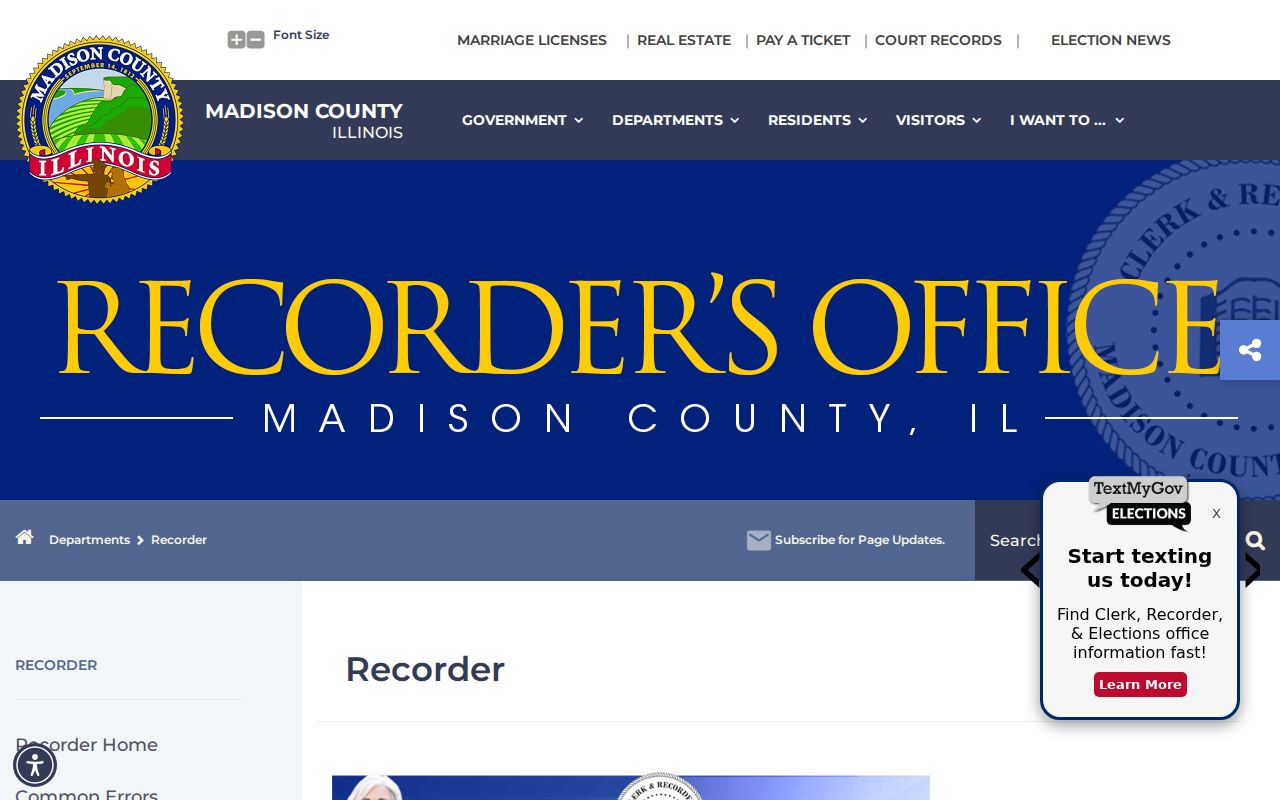
The office page supplies the key context: county land records start far earlier than the online search window.
Recorded Clues for Previous Residents
A house history may need more than warranty deeds. The Recorder’s official document list includes executor’s, administrator’s, guardian’s, judicial, sheriff’s, tax, mineral, mobile-home, warranty, and quitclaim deeds. It also lists mortgages, releases, liens, easements, plats, surveys, probate notices, and wills. A document-type filter can separate two people who share a name.
Probate-linked deeds and notices can explain a transfer that does not look like a normal sale. Plats and surveys link the modern parcel to older lot and block terms. Easements may explain a shared lane or boundary. These documents identify legal events, not every person in the home, so the search still needs directories, census records, and newspapers.
The document-category screen shows which instrument families can sit behind one address.
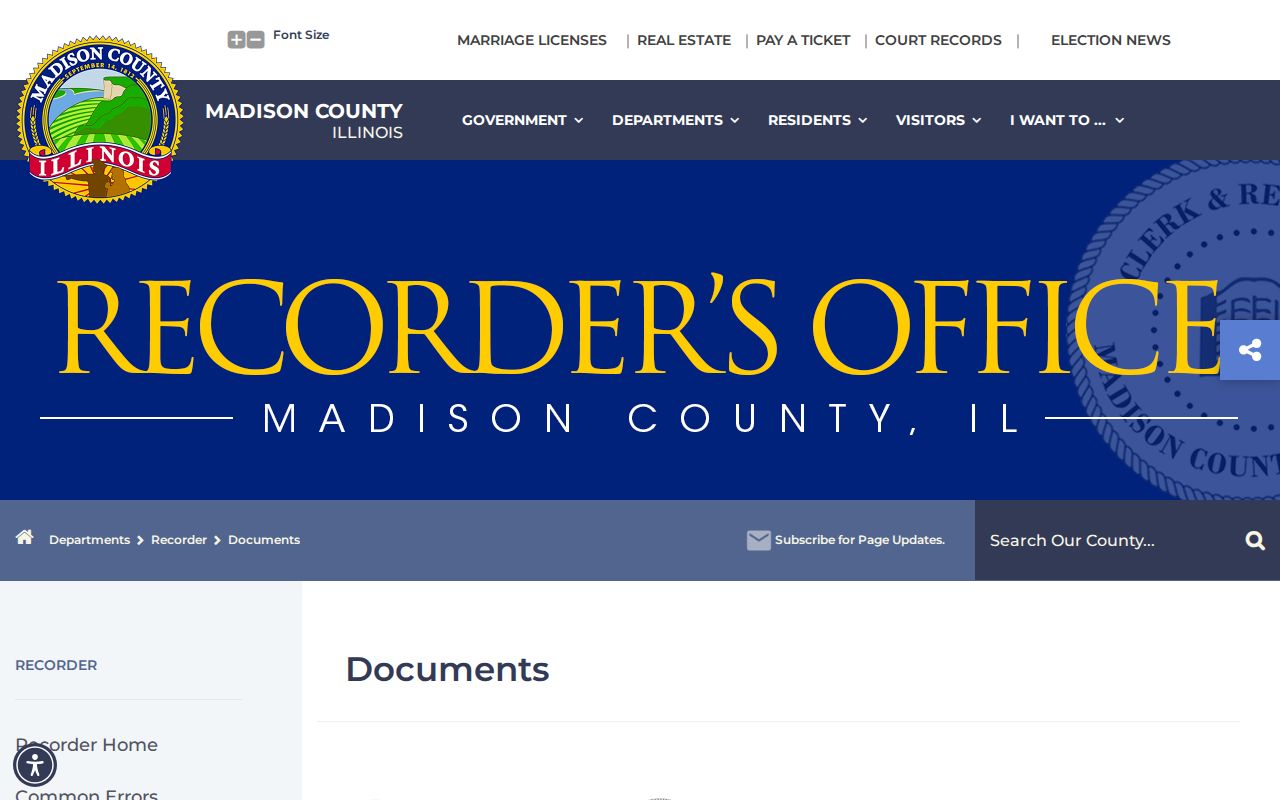
Choosing a narrow category can turn a broad surname search into a useful ownership or probate lead.
Place Madison County Households by Year
Owners are only half of the past-residents question. A printed directory can name a listed adult, spouse, address, or business in one publication year. The federal census can show a household and nearby entries in an open census year. An obituary may name kin, a former address, or a move. Each item is dated evidence, not a timeless resident list.
Use a simple sequence for one Madison County address:
- Search the nearest directory year by surname and by address when a street index exists.
- Check the closest open census and its enumeration district, the area assigned to one census taker.
- Compare spouse names, initials, work, and nearby households.
- Search newspapers, cemetery files, probate, and vital indexes for an end date or family link.
Hayner’s volumes are covered on the Madison County city directories page. Here, use them as dated occupancy points rather than as proof of title.
Hayner Tracks Alton Past Residents
The Hayner Genealogy and Local History Library is the strongest local stop for an Alton-area house. Its holdings include city directories, the Alton Property Research File, census indexes, newspapers, cemetery inventories, funeral-home records, maps, photos, family histories, and naturalization material. The room at 401 State Street in Alton offers staff help and one-on-one genealogy appointments.
Search the address and each known variant in the Alton Telegraph collection, then compare a nearby directory year. Newspaper Archive coverage listed by Hayner reaches from 1836 through 2012, while other licensed databases add newer text and obituary material. Access can depend on location or library-card status. Those files may identify occupants or events even when title stayed in one family member’s name.
Outside Alton, use Madison County Public Library, Edwardsville Public Library’s Illinois Digital Archives, Madison Historical at SIUE, the historical society, and the relevant city clerk. There is no single catalog for all county communities.
Map Madison County Previous Residents
A map does not name an occupant, but it can prove that the searched house number sat on the right block in a given era. The 1892 Alton Sanborn set has 14 sheets. Later sets expand through 1897, 1903, 1915/16, and a 1926 UIUC set with 82 leaves plus a title, key, and street index.
Start with the street index, locate the block, and compare house numbers, property lines, building footprints, and use labels. Then return to the directory for names and the deed for title. Sanborn sheets are fire-insurance maps, not modern parcel maps, so they cannot settle today’s boundary.
County 9-1-1 addressing was approved in 1989 and became operational in 1992. No countywide renumbering schedule was verified. When an old number fails, search a plat, Sanborn index, directory abbreviations, and city records.
Note: Keep the old address, current situs, PIN, and legal description as four separate fields in the research log.
Close Madison County Address Gaps
Permits date changes to a building, while probate and obituaries explain changes in the people tied to it. For unincorporated Madison County, request building permits, subdivision files, zoning-board files, flood files, nuisance files, or zoning maps from Planning and Development by address, PIN, and date range. No unified public county permit search was found. Inside a city, ask that municipal custodian.
The Madison Circuit Clerk’s historic digital collection and IRAD hold deep probate material. Probate books can identify an estate, executor, heir, or court event that bridges two deeds. Hayner newspapers, funeral-home files, cemetery inventories, and local vital indexes can add family context. Match each probate name or obituary address by date and parcel evidence.
The Recorder’s copy and search FAQ separates public access from title work the office will not perform.
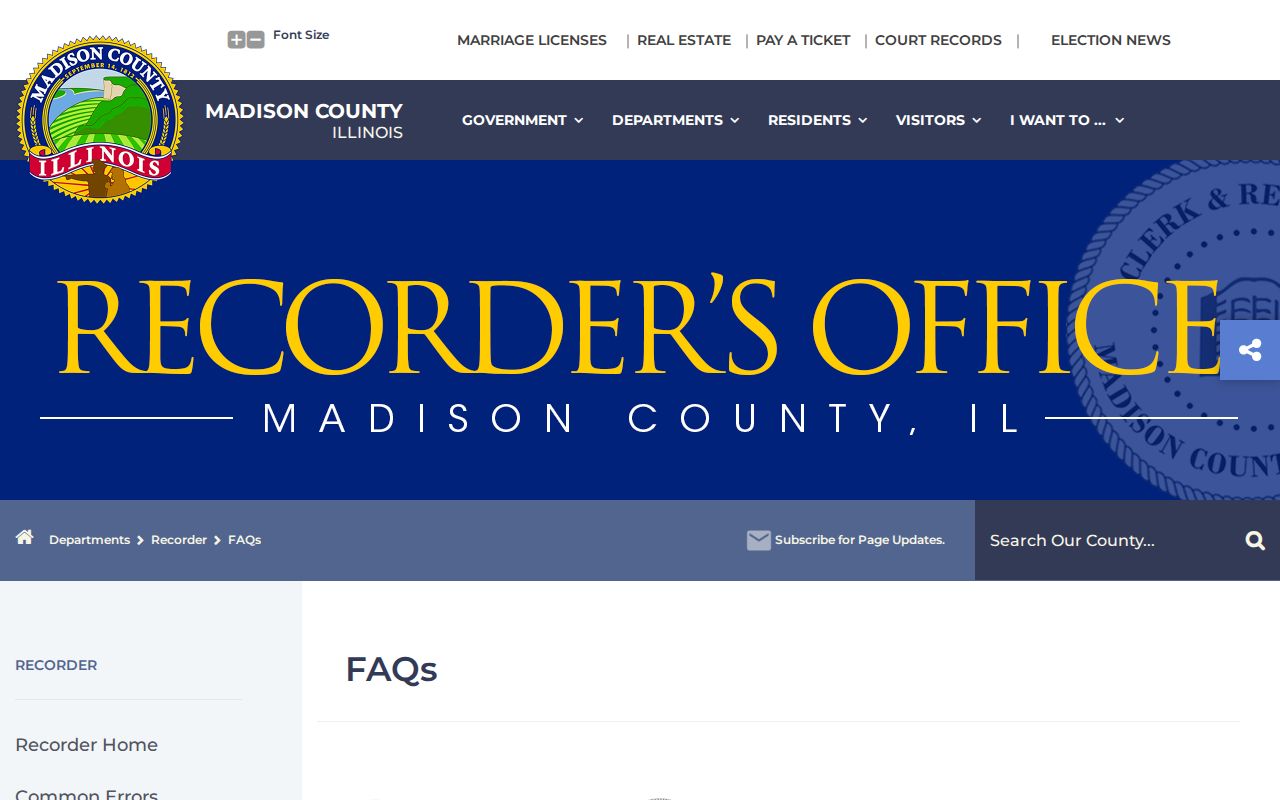
The page is a practical checkpoint for copy routes, redactions, and office limits before ordering an instrument.
Respect Living Madison County Residents
Historical research may cross into records about living people. Public ownership, directory, or voter information does not grant permission to contact, monitor, or publish someone’s private routine. Protected voters and people using Illinois Safe at Home may have an address withheld or replaced. Utility and delivery customer data are not public substitutes for a missing household name.
Use previous residents research for genealogy, a house timeline, an estate question, or local history. Verify sensitive claims with the original custodian, and avoid merging people merely because a surname and ZIP match.
Lawful use. Madison County address history is for responsible personal research; never use a record trail to stalk, harass, threaten, or expose anyone.