
Madison County Directory Shelves
The strongest Madison County city directory collection is at Hayner Genealogy & Local History Library in Alton. St. Louis County Library provides a separate shelf inventory, and the National Archives supplies independent checkpoints for several 1920s and 1930s years. The runs are incomplete. Verify a title page before assigning a publisher to a later volume.
| Collection | Years | Where held | Access |
|---|---|---|---|
| Alton directories | 1858; later 1800s through selected 2001 years | Hayner and St. Louis County Library | Reading room, print, microfiche, microfilm |
| Digitized Alton volume | 1886–1887 scan; McCoy span 1889–1902 | Archive.org / Hayner route | Free scan and OCR |
| East Alton / Wood River | 1926 forward, incomplete | Hayner | Local-history room |
| Granite City | 1998–2002; 1968 phone book | St. Louis County Library | Reference holdings |
| Highland | 1986, 1988, 1989, 1993–2001 | St. Louis County Library | Reference holdings |
| NARA checkpoints | Alton 1924–1935; Edwardsville area 1925–1934 | National Archives list | Shelf clue, not online name search |
Missing years are normal. No complete reverse-directory sequence or exact final printed year was verified, so an absent name must be checked in the volumes just before and after the target date.
Regional phone books add another layer but should not be merged with city directories without checking the title. St. Louis County Library lists Granite City, Madison, Mitchell, and Venice phone books for 1941, 1969, 1974, and 1978, plus a Madison and St. Clair regional book for 1989–1990. These volumes may organize names and places differently from an Alton householder directory. Record the exact title, edition, format, and library call number before citing an entry.
Alton Directories Start in 1858
Hayner identifies 1858 as Alton's oldest listed directory year. The 1866 Madison County title is associated with J.T. Hair and combines a county gazetteer with a directory of the Altons. Later supported publisher clues include W.B. Harris & Co., W.H. McCoy, and Huber Directory Company. The public shelf record continues through clusters such as 1889–1903, 1905–1921, 1923–1924, 1927–1931, 1933 and 1935, 1944, 1946–1947, 1975, and selected late 1980s through 2001.
The St. Louis County Library Illinois directory inventory provides formats and call numbers.
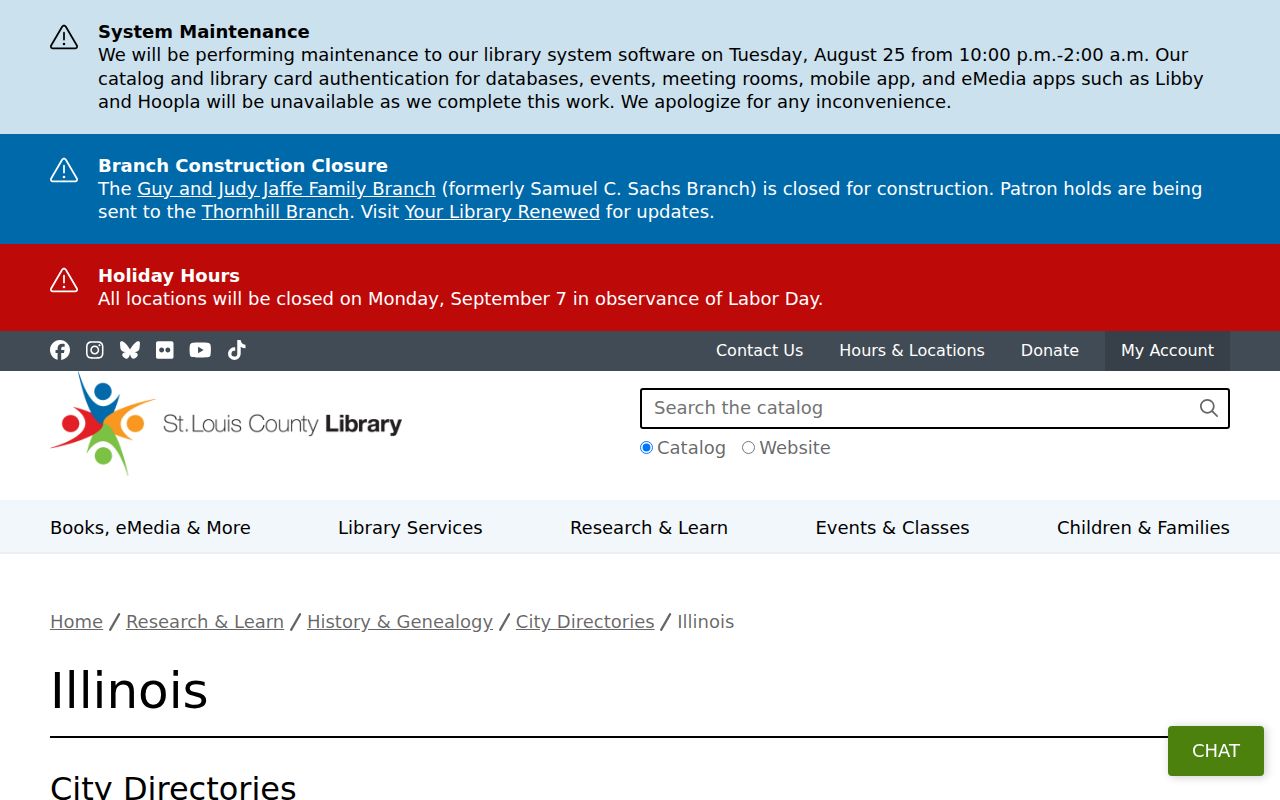
The screen helps locate a physical volume, while the volume's title page remains the best publisher evidence.
Use Hayner's Madison County Collection
Hayner Genealogy & Local History Library is at 401 State Street in Alton. Its staff can be reached at 618-462-0677, option 3, or genealogy@haynerlibrary.org. Hours are 8:30 a.m. to 5 p.m. Monday, Tuesday, Thursday, and Friday; noon to 7 p.m. Wednesday; and 8:30 a.m. to 1 p.m. Saturday. The room is the main local route for Alton, Upper Alton, North Alton, East Alton, Wood River, and nearby river communities.
Beyond city directories, Hayner holds census indexes, vital and naturalization material, family files, maps, photos, cemetery inventories, funeral-home records, newspapers, yearbooks, and the Alton Property Research File. One-on-one genealogy appointments are available.
The library's online genealogy resources connect readers to scans and licensed databases.
The capture shows why access can vary: some tools are free online, while others require a library card or an in-library visit.
Hayner lists Newspaper Archive coverage for the Alton Telegraph from 1836 through 2012. NewsBank supplies text from 2007 and full-color pages from 2020, while HeritageHub focuses on obituaries and death notices. Ancestry Library Edition is available in the library; Fold3 uses card access; FamilySearch access reflects Hayner's affiliate status. Ask staff which database holds the year needed, since license terms and remote access can change.
Readers elsewhere in Madison County also have a public-library fallback. Madison County Public Library offers in-library Ancestry Library Edition, HeritageHub, genealogy appointments, and collections covering census, vital, immigration, family, military, court, directory, photo, and map sources. For Highland, Granite City, Collinsville, or Edwardsville, search that route alongside the local municipal archive rather than assuming the Alton shelf covers the whole county.
Read a Madison County Directory Entry
A visible OCR example from an Alton scan lists James H. Snoddy, names his wife Josie in parentheses, and gives 539 East 6th Street. A separate line names a related remedy company. That sample proves the fields below can appear in a Madison County city directory, though it does not establish every symbol used in every volume.
| Name | Full printed name, spelling as typeset or read by OCR |
|---|---|
| Relationship | A spouse may appear in parentheses |
| Address | House number, street, city, and state for that edition |
| Business line | A firm or trade can appear separately from the household |
| Key and symbols | Must be checked in the specific volume before interpretation |
- Criss-cross section
- An address-order part of a directory, if that edition truly provides one.
- Householder index
- A list centered on household names rather than every person or firm.
- Abbreviation key
- The volume's own explanation of shortened words and marks; save it before reading entries.
The digitized Alton directory allows page and OCR searching.
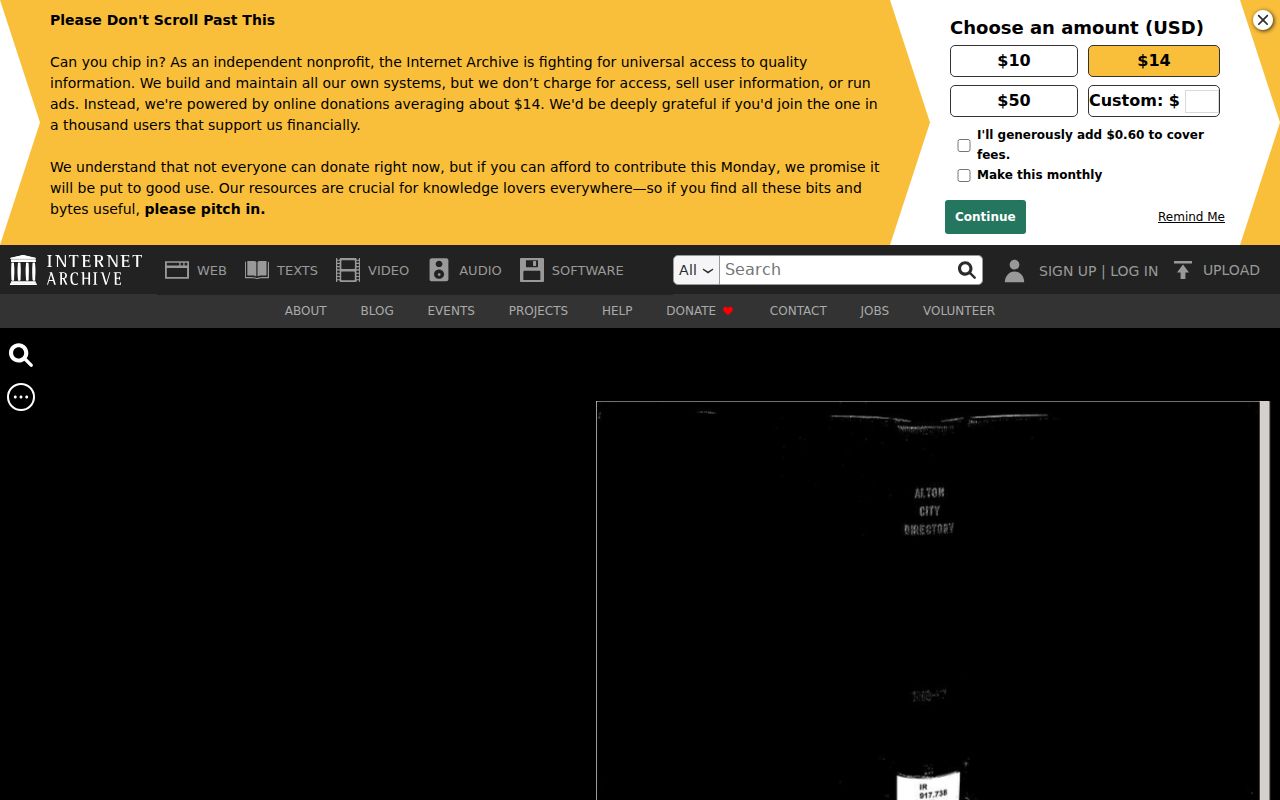
OCR can miss old type. Check the page image, abbreviation key, and nearby name variants before ruling a person out.
Open Madison County Digital Archives
The Edwardsville Public Library collection in Illinois Digital Archives supplies cemetery inscriptions, naturalization material, county histories, biographies, and atlases. These are companion sources, not a complete city-directory run.
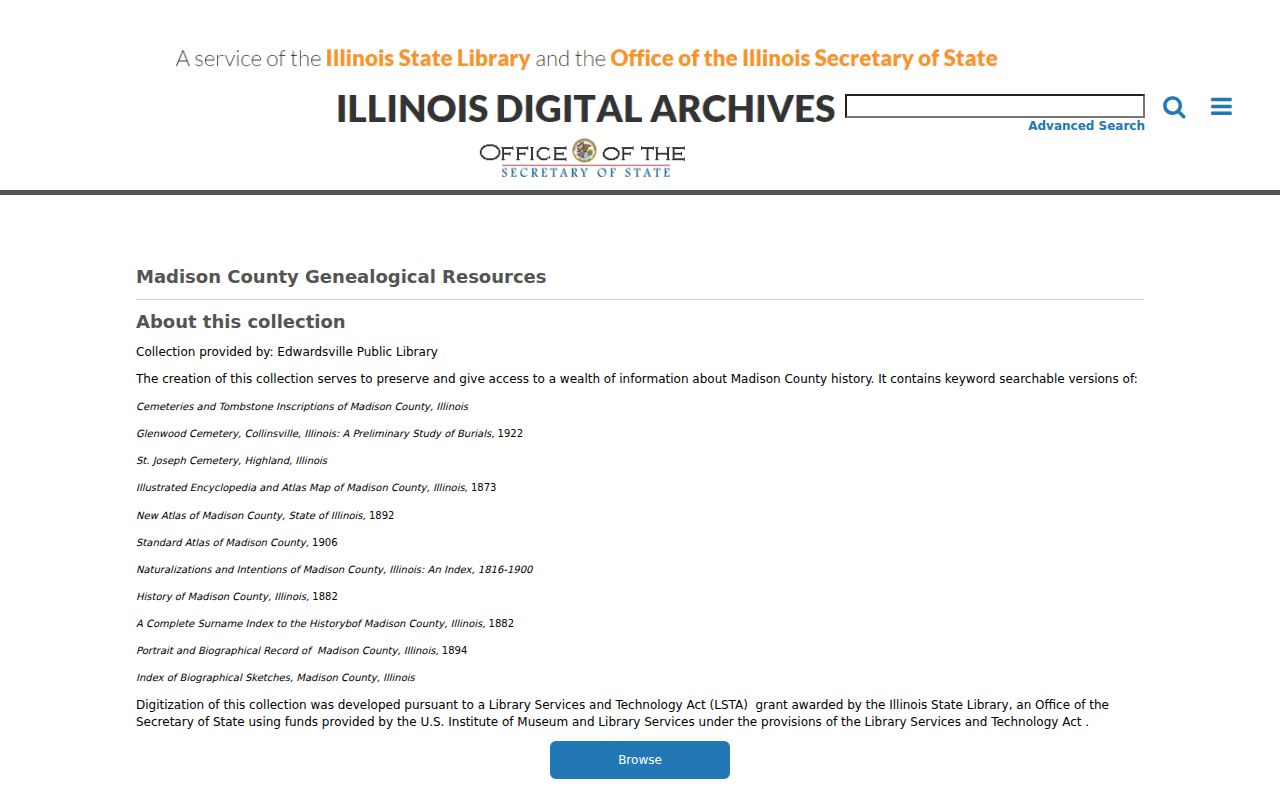
The archive can connect a directory name with a cemetery, atlas, or naturalization index while preserving the source date.
The Edwardsville collection includes county cemetery and tombstone inscriptions, a preliminary Glenwood Cemetery burial record for Collinsville, St. Joseph material from Highland, atlases dated 1873, 1892, and 1906, and naturalization or intention records from 1816 through 1900. It also supplies an 1882 county history with a surname index and an 1894 portrait and biographical index. Each is a way to test a name or place found in a directory, not a substitute for the original directory page.
Madison Historical at SIUE adds Alton and Godfrey images, letters, school and community oral histories, and museum digitizations.
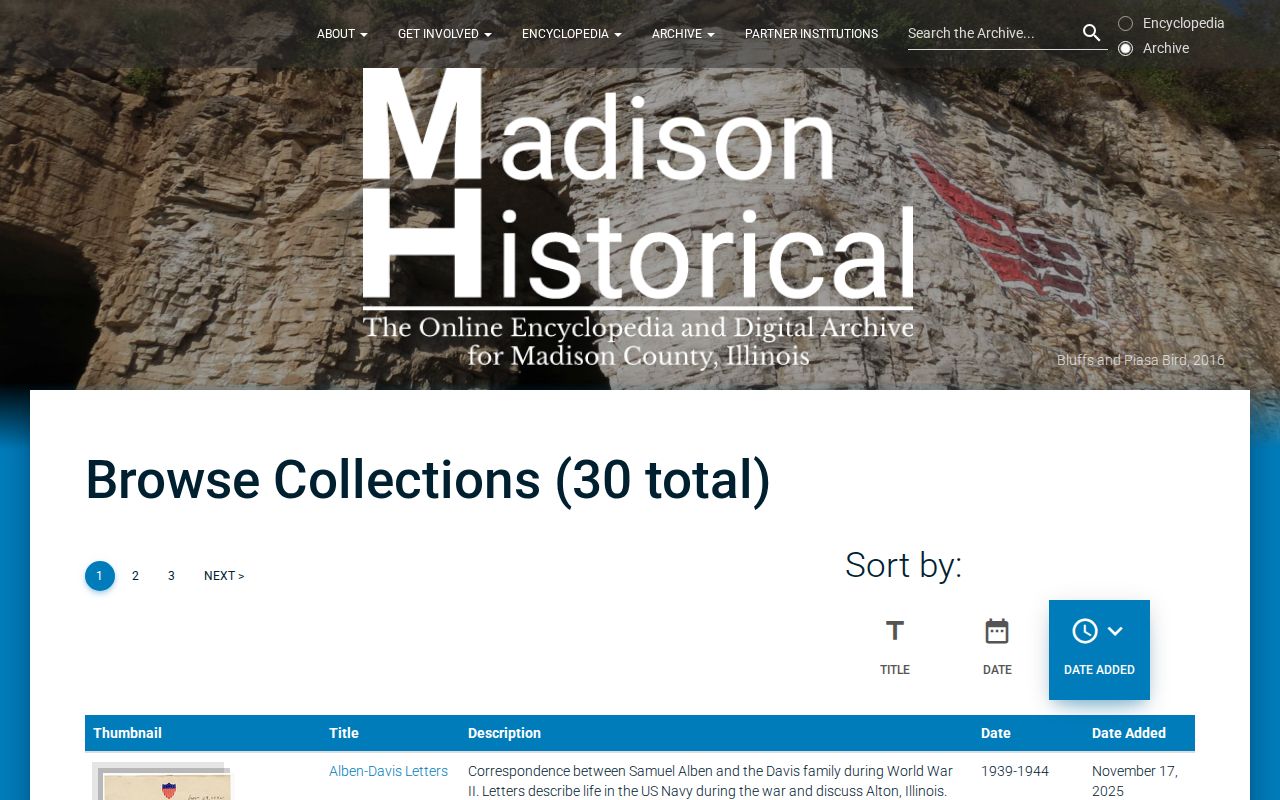
Those records add community context without turning a photo or oral history into proof of residence.
The Madison County Historical Society provides another catalog and reading-room route. Its PastPerfect catalog describes images, maps, local publications, and the Flaggs of Moro family correspondence. The archival library is at 801 North Main Street in Edwardsville, with contact through info@madcohistory.org or 618-656-7569. Current hours, fees, and the full scope of name indexing were not verified, so contact the society before planning an on-site search.
Check Madison County NARA Years
The National Archives 1930 directory list confirms Alton editions for 1924, 1927 through 1931, 1933, and 1935. It also identifies Edwardsville or Madison County years for 1925, 1927, 1929, 1932, and 1934. This is a holdings clue created for census research, not a searchable resident database.
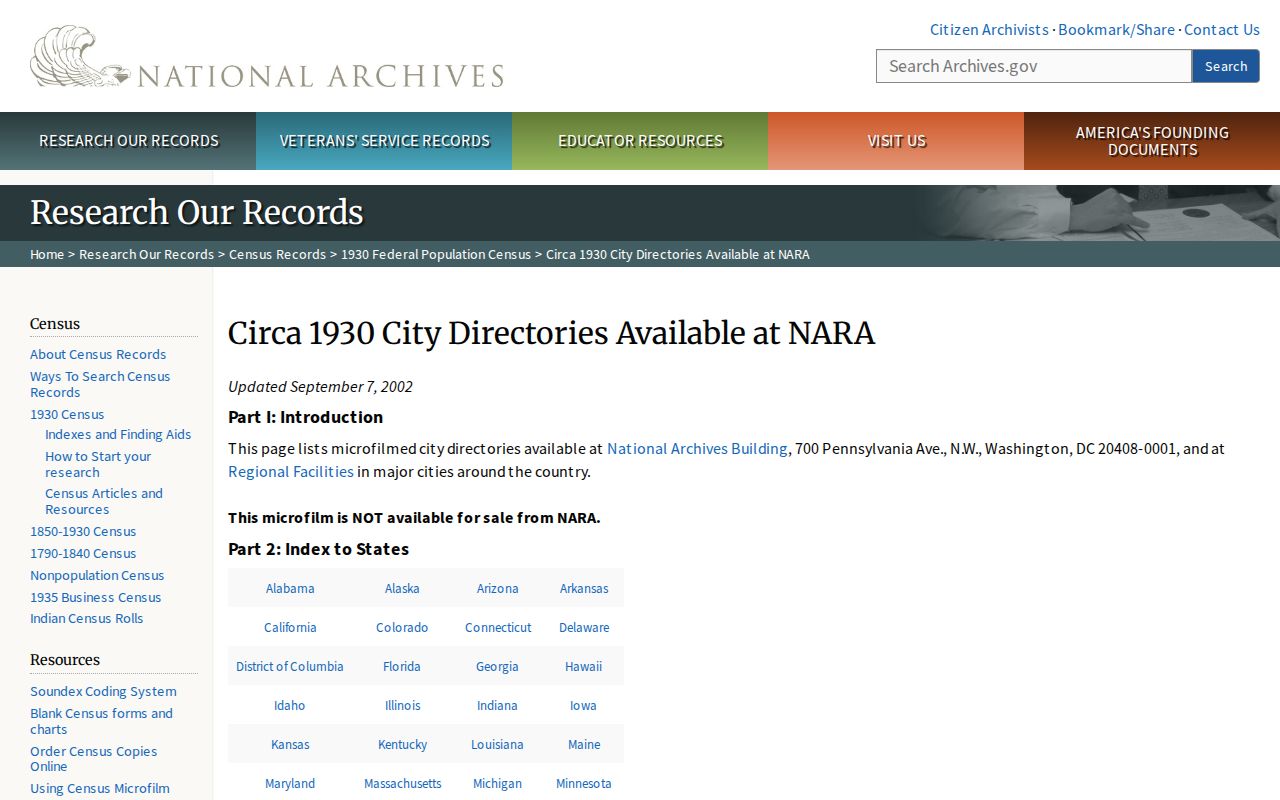
The independent list is useful when a local shelf has a gap or a catalog title is vague.
Reverse Madison County Directory Streets
No complete, dedicated reverse-directory run was verified in the official library pages. Inspect each printed volume for an address section, search OCR for the house number and street, and compare the same block across nearby years. A volume without an address index is not a true criss-cross directory.
A listed household is evidence for that publication year. It is not title proof and does not set an exact move date. The modern parcel and deed chain belongs with the Madison County street directory search.
Note: Save the title page and abbreviation key with each entry so the publisher, edition, and printed marks stay tied to the evidence.
Madison County Records Reach Back
Madison County was formed in 1812, and Edwardsville has remained the county seat. IRAD preserves early deed, court, marriage, probate, naturalization, school, poor-farm, and local-government series. The historical Circuit Clerk collection is unusually deep: CONTENTdm describes 122 immigration and naturalization volumes, three slave-emancipation-register volumes, and 458 probate books.
This depth explains why “everything is online” is a myth. A city directory may be on microfilm, a probate volume may be digitized, and an early deed may still require a terminal, vault, book, or archive request. The county's current digitization projects have Q4 2026 targets, so online coverage should be checked again after an update.
IRAD's Madison County holdings provide the long bridge around a missing directory year. Listed series include circuit files from 1812–1925, chancery from 1815–1912, criminal files from 1813–1932, early deed indexes and records, marriages from 1813–1903, probate files beginning in 1813, naturalizations into the twentieth century, and coroner inquests from 1815–1894. Access is series-specific through the Illinois Regional Archives Depository at Southern Illinois University Carbondale. A catalog date range confirms that a series exists; it does not mean every page image is online.
Trace Madison County Family History
City directories fill the years between federal censuses. Begin with a name, spouse, occupation, or street, then preserve the exact spelling and page before moving to another edition. A missing name may mean a move, death, omission, changed form of the name, or failed OCR.
- Find the first likely entry and save the edition, page, name, spouse, address, and business line.
- Search the prior and next available years. Note each change instead of assuming the household stayed put.
- Use a street-order section, when present, to inspect the block and resolve people with the same name.
- Pair the closest directory with the 1820–1930 census indexes held at Hayner and then consult the census image.
- Close a disappearance with newspapers, obituary and cemetery files, probate, deeds, or a later directory.
Hayner lists the Alton Telegraph archive from 1836 through 2012, with later text and full-color coverage through other databases. Yearbooks, Marks Funeral Home records, cemetery inventories, and the Alton Property Research File can supply the missing date or relationship. Each clue should be confirmed in the source most suited to it.